

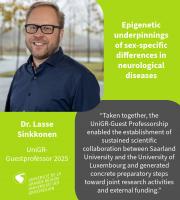
As part of the UniGR Visiting Professorship 2025, Dr. Sinkkonen is opening new perspectives for sex-sensitive research on neurodegenerative diseases.
As part of the UniGR-Guestprofessorship, Dr. Lasse Sinkkonen from the University of Luxembourg was hosted at the Chair of Genetics and Epigenetics at Saarland University in December 2025 and January 2026. The aim of the two-month research stay was to work together with Prof. Julia Schulze-Hentrich and her team to investigate the molecular basis of sex differences in neurodegenerative diseases, particularly Parkinson’s disease.
The main focus was the development of a joint funding proposal under the new Priority Programme of the German Research Foundation (DFG) titled SEXandGLIA. The project aims to uncover how sex and brain region shape the identity and behavior of specific glial cells – especially astrocytes and oligodendrocytes.
In particular, the project investigates how these regional and sex-specific differences can influence how the cells respond to oxidative stress, a key component of many neurodegenerative diseases that manifest differently between males and females, and between different brain regions.
Further Project Initiatives and Sustainable Collaboration
In addition to the submitted main proposal, a second collaborative project was initiated, planned for submission in spring 2026. This project focuses on the potential role of metabolic enzymes in Parkinson’s disease risk, particularly hormone-processing enzymes and their impact on brain homeostasis. The aim is to ensure long-term collaboration between Saarbrücken and Luxembourg beyond the UniGR-funded visit.
The on-site, personal exchange proved particularly valuable. As Dr. Sinkkonen summarizes:
„Working on new project proposals was found to be particularly efficient when working at same location allowing quick exchanges between the host and myself“
Knowledge Transfer and Shared Infrastructure
A major added value of the visit was the intensive methodological exchange and the opportunity, as part of UniGR, to access highly specialized infrastructure at the partner university. Access to complementary technologies and platforms within the network opens up experimental possibilities that would not be feasible at the home institution alone.
In Prof. Schulze-Hentrich’s lab, a new experiment was initiated to analyze DNA methylation changes in a model of early-onset Parkinson’s disease, establishing another joint research line. Additionally, there was close collaboration with the Epigenomics platform in Saarbrücken: Dr. Sinkkonen and his team participated in a training on a newly available spatial multiomics technology. Joint experiments using this method are planned for 2026.
Networking and Scientific Dialogue
During his stay, Dr. Sinkkonen presented his research in multiple seminars and actively engaged in scientific exchange with other research groups on campus. He also supported ongoing PhD and postdoctoral projects through individual consultations and participated in the monthly Professorium in Life Sciences.
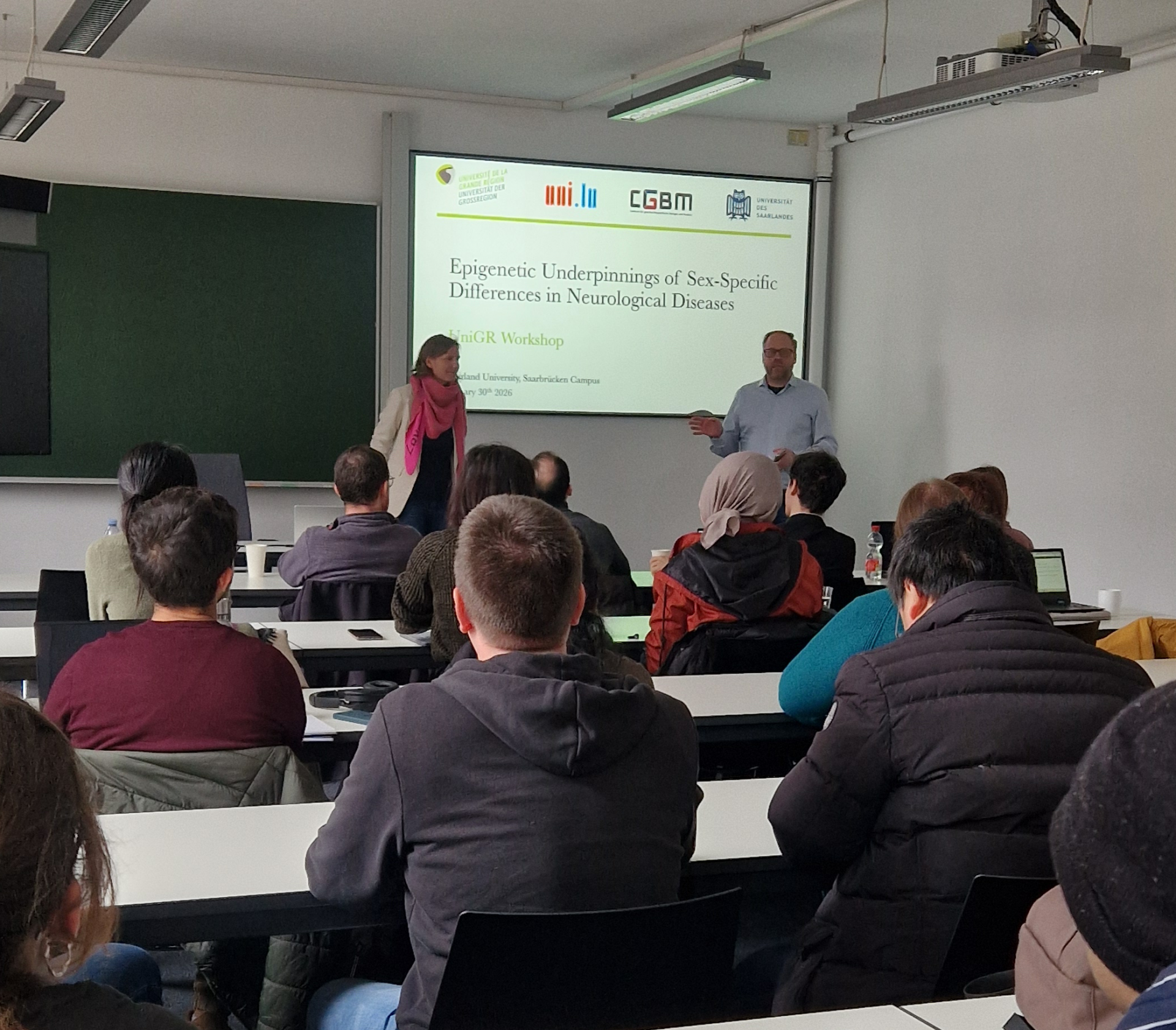
The visit concluded with a UniGR Workshop on Epigenetic Underpinning of Sex Differences in Neurological Diseases. Invited speakers included Frank Kirchhoff and Enrico Glaab, who contributed complementary perspectives. Two early-career PhD students also presented their projects. With over 45 registered participants, the workshop reached full capacity.
“Taken together, the UniGR Guest Professorship enabled the establishment of sustained scientific collaboration between Saarland University and the University of Luxembourg and generated concrete preparatory steps toward joint research activities and external funding.” – Dr. Lasse Sinkkonen