

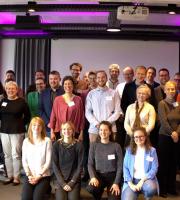
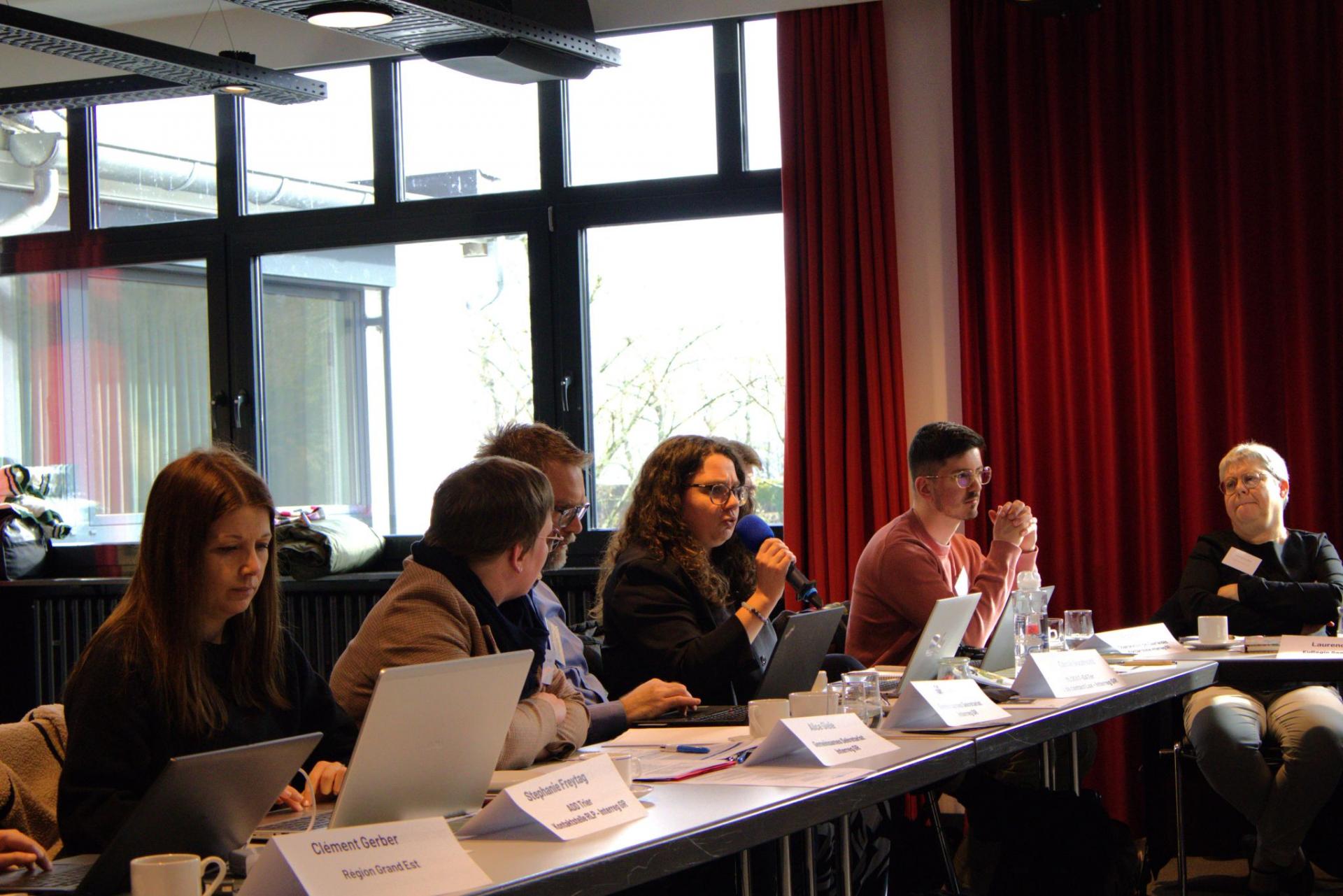
On 4 February 2026, the partners of the LATI project gathered at Hotel am Triller in Saarbrücken for the project's first Steering Committee meeting (COMAC)
This annual meeting marked an important milestone after ten months of implementation, providing an opportunity to present the project's initial achievements, exchange views with representatives of the Interreg Greater Region Programme, and define priorities for the year ahead.
Led by the University of the Greater Region, LATI is funded under the Interreg Greater Region Programme. The project aims to strengthen cross-border governance within the Greater Region by developing tools, methods and collaborative spaces that support territorial planning and development.
A Project Progressing According to Plan
After its first year of activity, the overall assessment is highly positive. Representatives of the Interreg Greater Region Programme highlighted the project's strong progress, achieved in line with both the planned timetable and budget. Discussions during the Steering Committee meeting provided an opportunity to review the progress of each work package, address questions from committee members and confirm the relevance of the project's strategic direction.
From a financial perspective, expenditure and budget consumption are also developing as expected. Although some activities have required adjustments due to administrative or methodological constraints, the project remains fully aligned with its original roadmap.
Tangible Progress Across All Work Packages
Partners presented the first results of Work Package 1, dedicated to territorial development tools. One of its key achievements is the preparation of a planning compendium for the Greater Region, currently nearing completion. This work is based on a comparative analysis of planning systems across the different sub-regions and will serve as a reference document for territorial planning stakeholders. At the same time, a multilingual glossary is being developed to facilitate understanding of planning terminology used in the various national and regional contexts. Partners are also working on a knowledge portal and exploring the development of an artificial intelligence chatbot designed to answer questions from planning practitioners and citizens based on the project's outputs.
Work Package 2, focusing on Living Labs, successfully delivered its first Living Lab on the topic of No Net Land Take (NNLT). Held in Esch-sur-Alzette, the event brought together citizens and planning professionals through a series of participatory activities aimed at raising awareness of land consumption issues. The lessons learned from this first experience are already feeding into preparations for future Living Labs. Partners also highlighted the success of the Greater Region Forum on Climate Change Adaptation, which brought together nearly 70 participants in Arlon.
Work Package 3 continues to advance its research and training activities. Surveys have been launched to identify the knowledge and training needs of planning professionals and students across the Greater Region. Preparatory work is also progressing on exploratory Soil Walks, future MOOCs and the development of an simulation game focused on planning cultures.
Multilingualism at the Heart of Cross-Border Cooperation
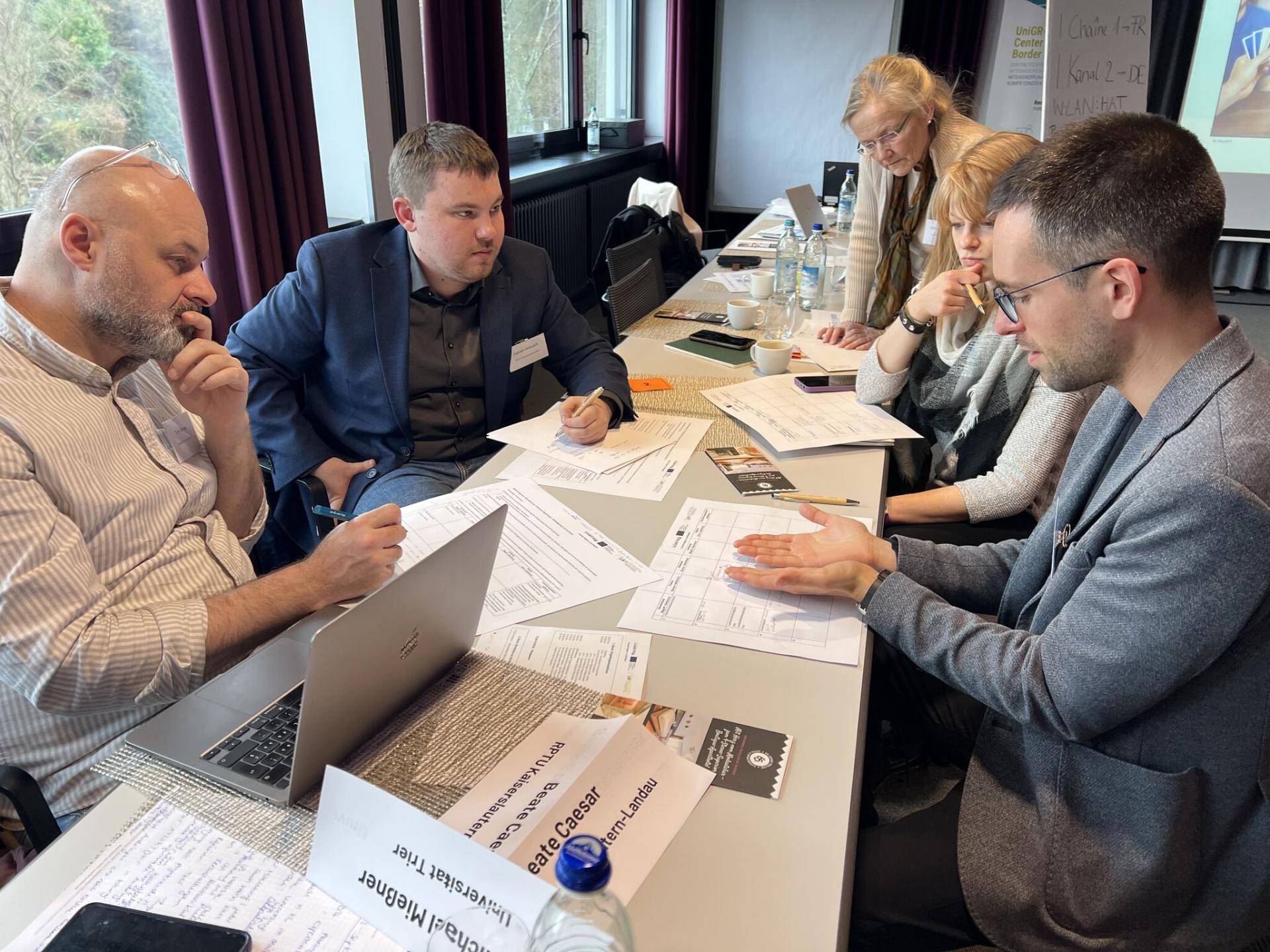
One of the highlights of the day was the workshop dedicated to multilingual communication, a central theme of Work Package 4. Acting as a transversal component of the project, this work package supports partners in addressing the challenges of collaborative work within a multilingual environment.
Initial activities included a comprehensive assessment of the linguistic profiles of project team members, revealing competencies in eleven languages and six different native languages. While this diversity represents a major asset for the project, it also underlines the importance of implementing effective communication strategies to facilitate cooperation among partners and interactions with stakeholders.
The workshop organised alongside the Steering Committee meeting helped raise awareness of these challenges and encouraged collective reflection on linguistic and intercultural practices within the project.
Building Expert Networks for the Future
The Steering Committee also provided an opportunity to review progress on the Expert Committee established under Work Package 5. This group has been created to strengthen the project's impact, visibility and long-term sustainability while facilitating the exchange of expertise among planning professionals across the Greater Region.
Composed of 23 experts representing all sub-regions of the Greater Region, the committee brings together local, regional, national and cross-border perspectives. Its mission is to contribute to the development of recommendations and to support the transfer of project results into planning practice.
Preparations are currently underway for the committee's first in-person meeting, scheduled to take place in Metz in May 2026. Discussions will focus in particular on No Net Land Take, mobility and the adaptation of territories to environmental challenges.
Preparing Today for LATI's Long-Term Future
Beyond operational monitoring, the day concluded with a Steering Committee session dedicated to strategic issues. Among the most important topics discussed was the long-term sustainability of LATI beyond the project's official end date in March 2028.
This issue is already recognised as a key challenge. The tools developed, networks established and knowledge generated through LATI are intended to continue supporting territorial cooperation across the Greater Region well beyond the project's duration. Discussions have therefore begun on the most appropriate ways to ensure the continuation, dissemination and long-term use of the project's results.
This first Steering Committee meeting confirmed the positive momentum of LATI. Thanks to the commitment of all project partners and the support of the Interreg Greater Region Programme, the project has established a strong foundation for future development and is already making a significant contribution to more integrated, innovative and collaborative cross-border territorial governance.