

How can the Greater Region reduce land take? A new interview series within the LATI project brings together the perspectives of spatial planning practitioners from across the Greater Region.
These interviews are conducted within the framework of the Interreg GR VI A project LATI – Laboratory for Territorial Intelligence. The series helps to contextualize early findings from the analysis of planning instruments in the Greater Region and to assess them against the practical feasibility of the NNLT objective.
The aim is to validate and enrich the assumptions of the planning compendium developed within the project, drawing on insights from practice. The results will be published as open, accessible, and practice-oriented case studies in the Greater Region planning compendium.
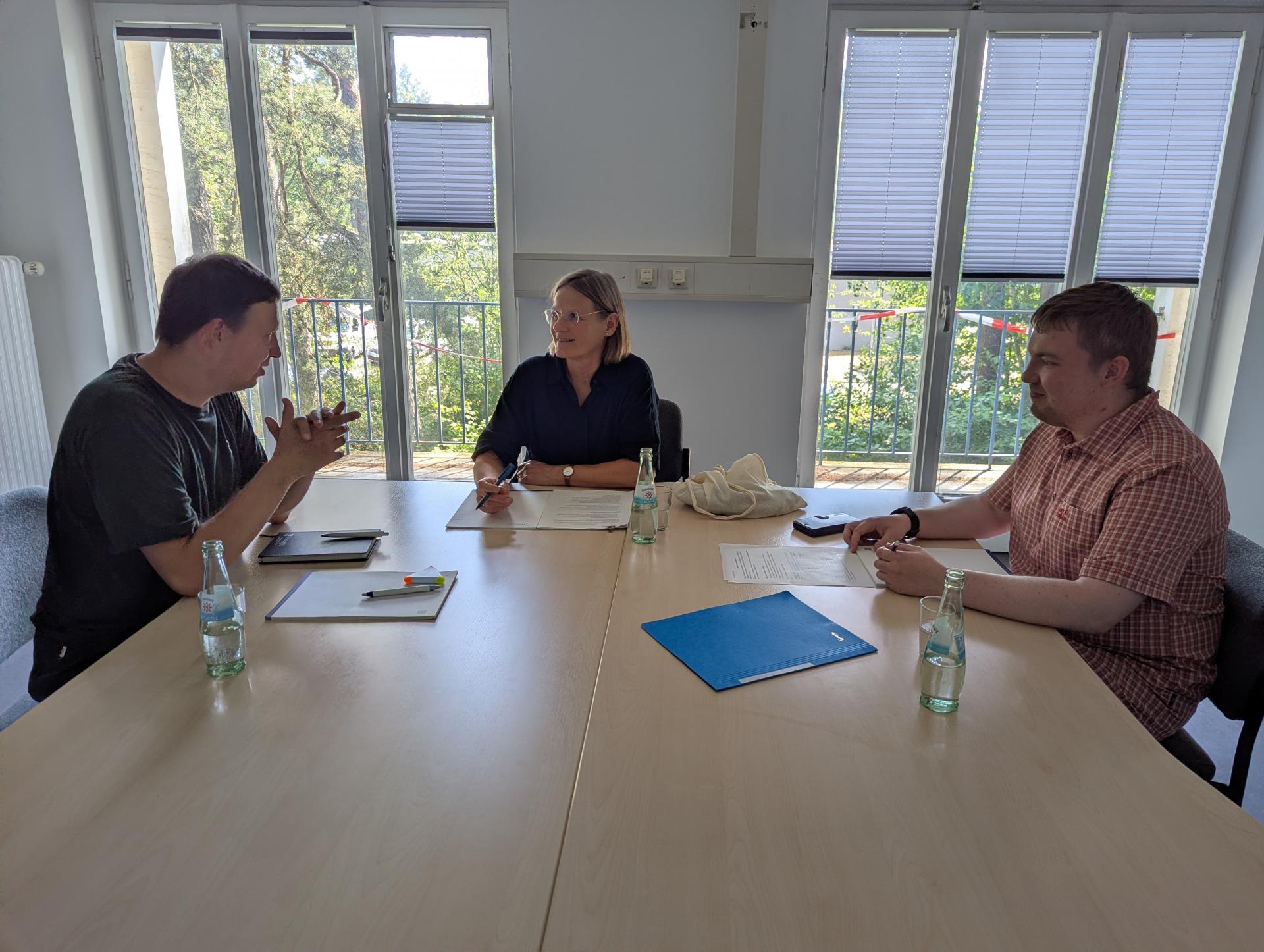
The series was launched by Raimund Rinder, Head of Division for Open Space Conservation, Cultural Landscapes and European Spatial Development at the Ministry of Economic Affairs, Tourism, Energy and Climate of Rhineland-Palatinate. The interview focused in particular on:
- the assessment of the role of regional planning in reducing land consumption in Rhineland-Palatinate
- key barriers to achieving reduction targets
- existing support instruments for municipalities in land-saving settlement planning
- potential effects of different planning approaches in cross-border contexts
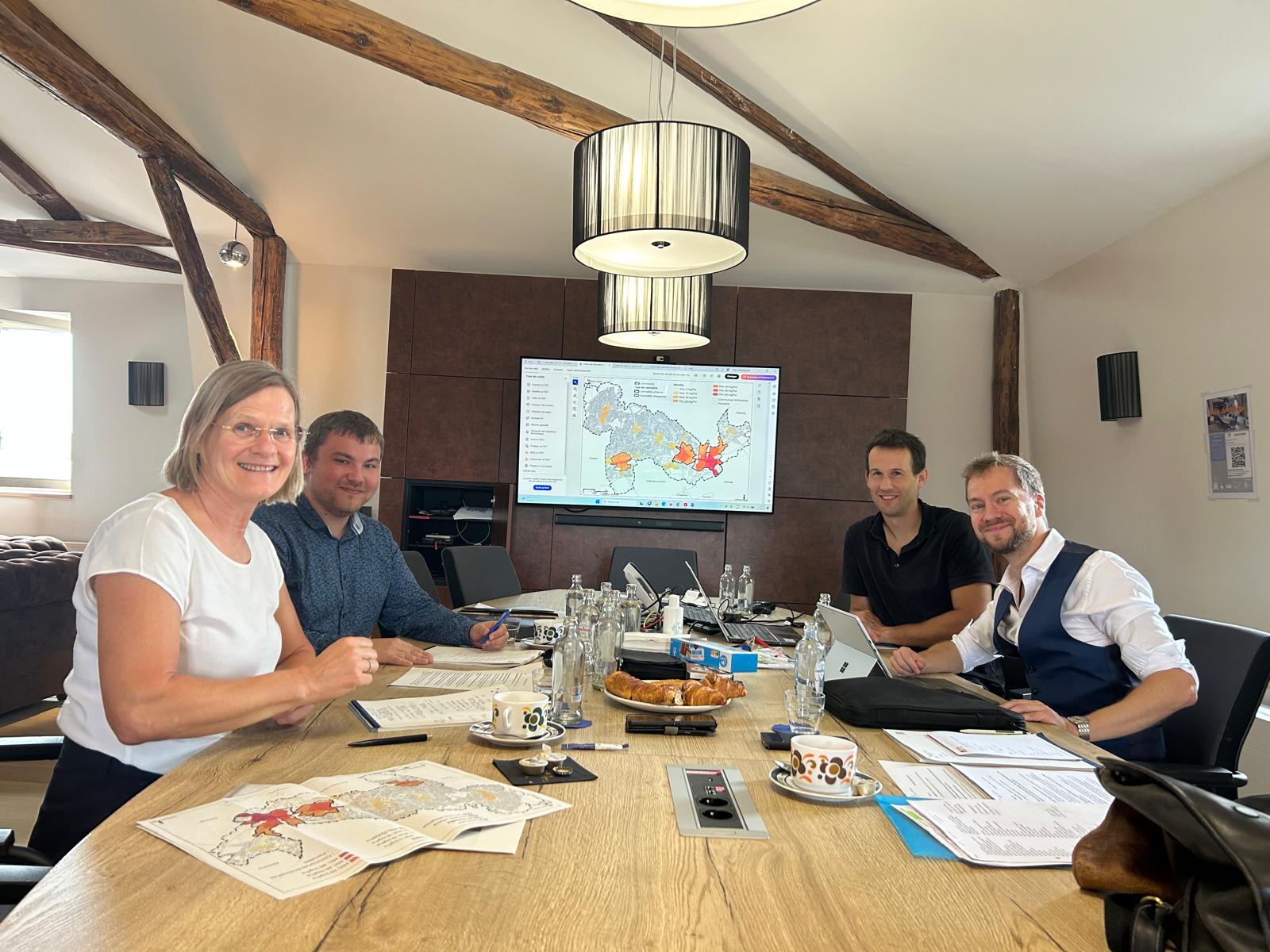
On 18 August 2026, the third expert interview in the series took place in Aubange, Wallonia. Kristen Mangels and Fabian Imbusch met with François Kinard, Mayor of Aubange, and Nicolas Klée, Head of the Urban Planning Department, to discuss the Walloon planning system and its instruments at the local level.
The discussion focused, among other things, on:
- understanding the specific features of the Walloon planning system;
- the implementation of higher-level requirements aimed at reducing land take in local planning documents;
- the potential effects of different planning approaches in cross-border regions.
Further interviews with spatial planning practitioners at local, regional and cross-border levels will take place until the end of September across all four parts of the Greater Region.