


Alongside Marie Semelin’s novel Les certitudes, the students’ short stories were also recognised and celebrated.
Created in 2021 by the Université de Lorraine and the University of the Greater Region (UniGR), the “Frontières” Literary Prize annually honours an outstanding novel exploring the theme of borders in its many dimensions.
This year, the prize also placed students’ creativity in the spotlight through a dedicated short story competition entitled "Écrire aux frontières" (“Writing at the Borders”). The award ceremony took place on Monday, 18 May 2026 at 6 p.m. in the ceremonial hall of the Université de Lorraine in Nancy.
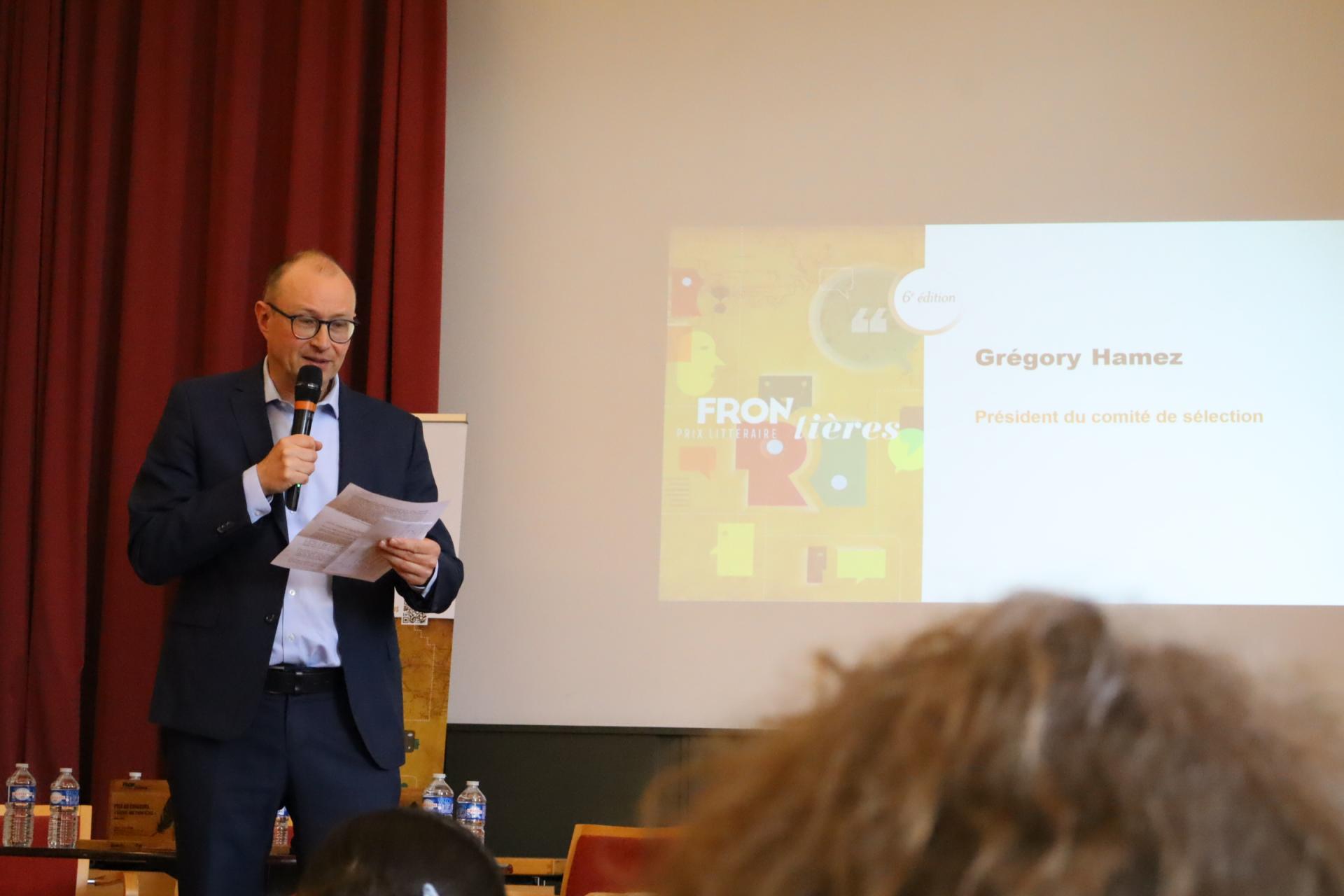
The concept of “borders” can be interpreted in many ways, particularly in a geopolitical sense: through the closure of borders during the Covid-19 pandemic, which shaped the very first edition of the Prize in 2021, or through the shifting and fragmentation of borders during conflicts such as the World Wars and, more recently, in Ukraine and the Middle East — themes also explored in other award-winning works.
It is within this context that Marie Semelin, winner of this sixth edition and investigative journalist, wrote her novel Les certitudes. Covering the period from 1955 to the tragic events of 9 October 2023, the novel addresses the Israeli-Palestinian conflict in what the jury described as a “particularly nuanced and intelligent way.” The narrative invites readers to question inherited certainties as well as differing perspectives — whether historical, political or personal.
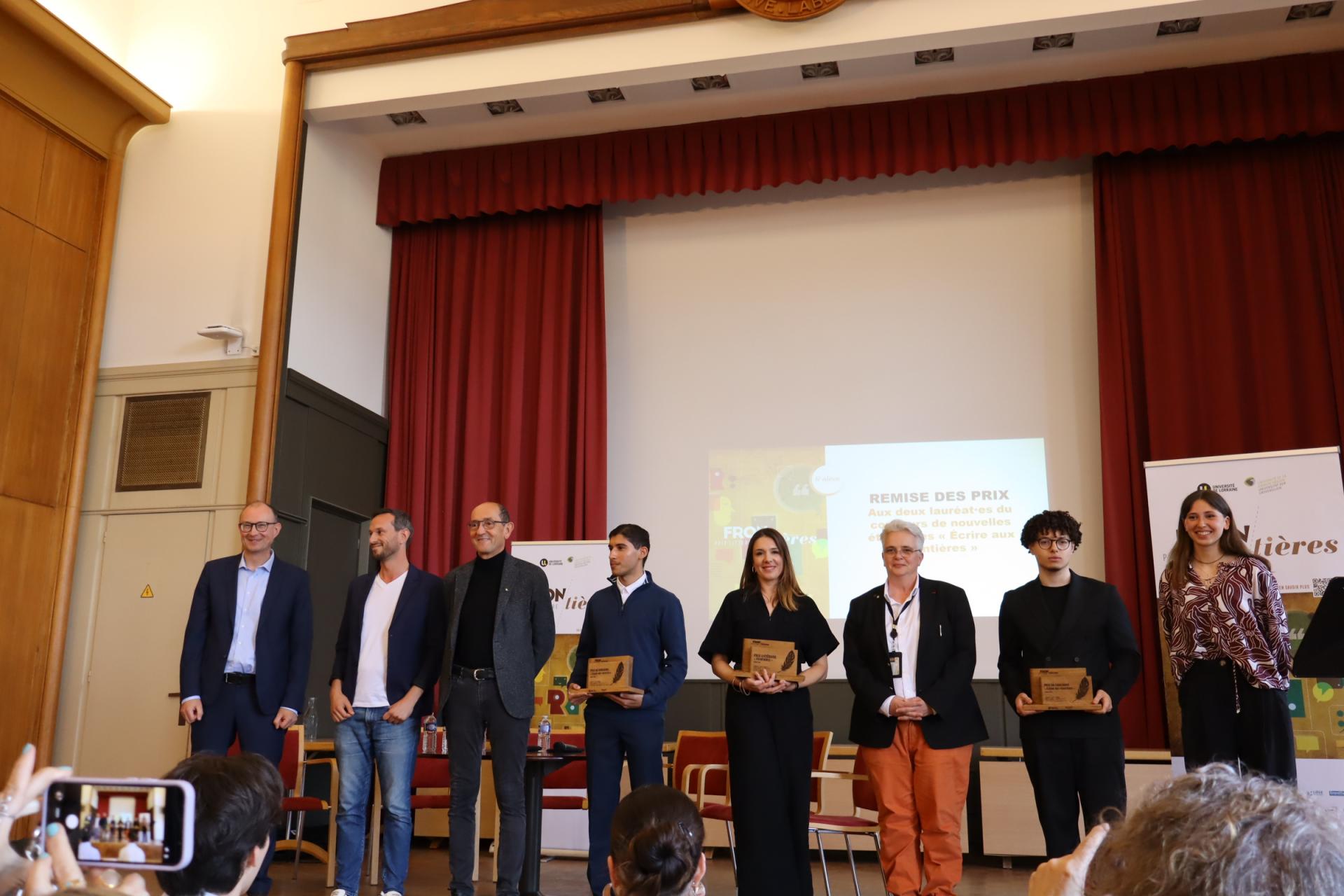
The student competition was divided into two categories: creative texts written without artificial intelligence and texts produced with AI support. Among the submitted entries, 77% belonged to the first category, while only 23% relied on AI.
Borders can also carry a broader meaning. In his short story Le poids du fusil, which recounts an act of revenge rooted in Kabyle traditions surrounding “blood crimes,” Amire Terrak — winner of the non-AI category — explores several boundaries: those between customary law, formal rules and personal morality, as well as between childhood and adulthood.
Yanis Saouda, winner of the AI-assisted category, examines the boundary between human and machine. In his short story Je, tu, il, elle… ça, a man disconnected from his own emotions gradually seems to transform into a robot, while his conversational agent becomes increasingly human and empathetic.
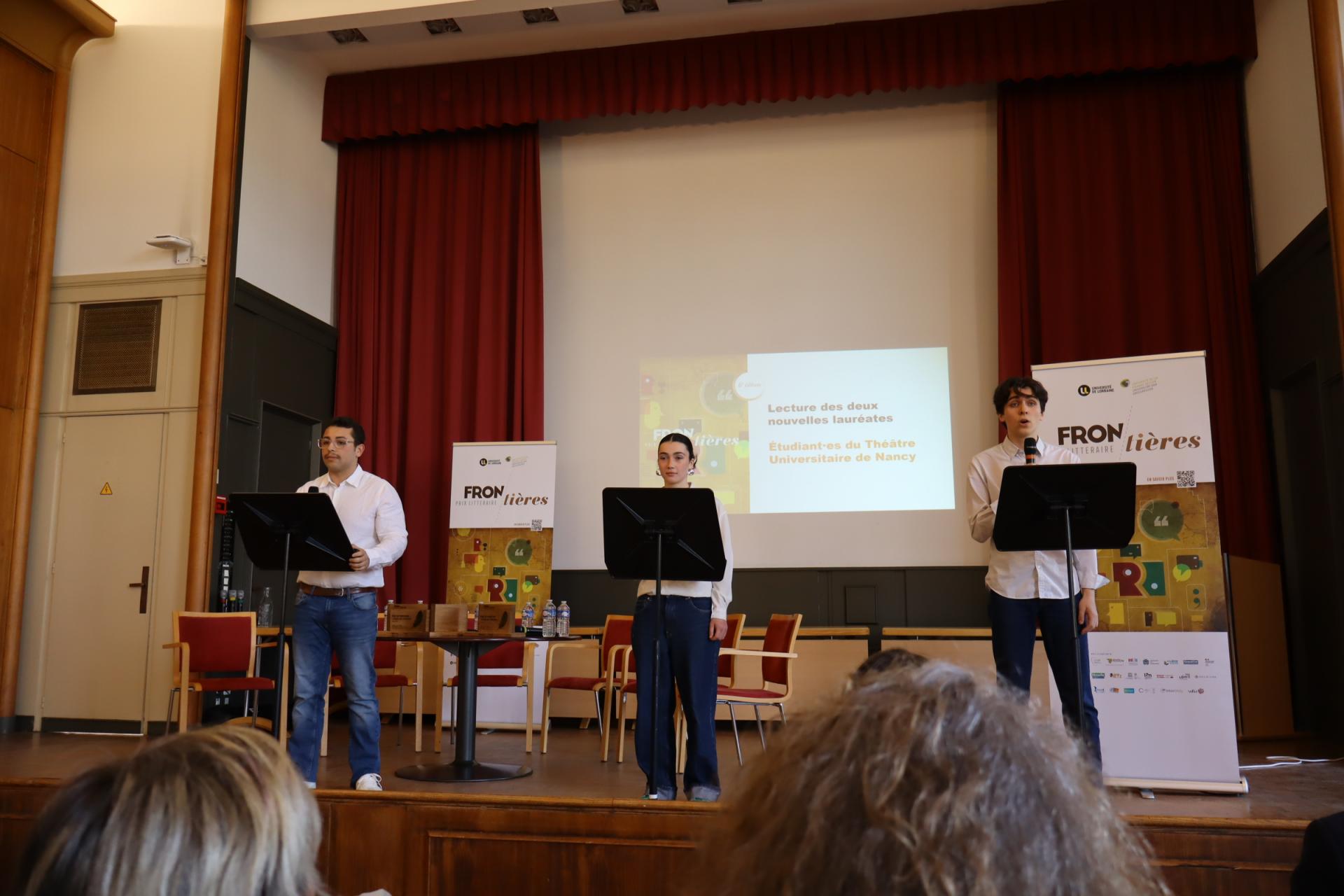
The two stories were brought to life by four theatre students whose performances deeply engaged the audience.
This new prize also provided an opportunity to reflect on the role of artificial intelligence in creative work. A roundtable discussion on the topic, moderated by Philippe Schneider, coordinator of the “Frontières” Literary Prize, brought the evening to a close. Participants included Marie Semelin, the two award-winning students, Samuel Nowakowski, author of L’essentiel de l’intelligence artificielle, and Anissa Hamza-Jamann, lecturer and researcher specialising in AI for foreign language learning.