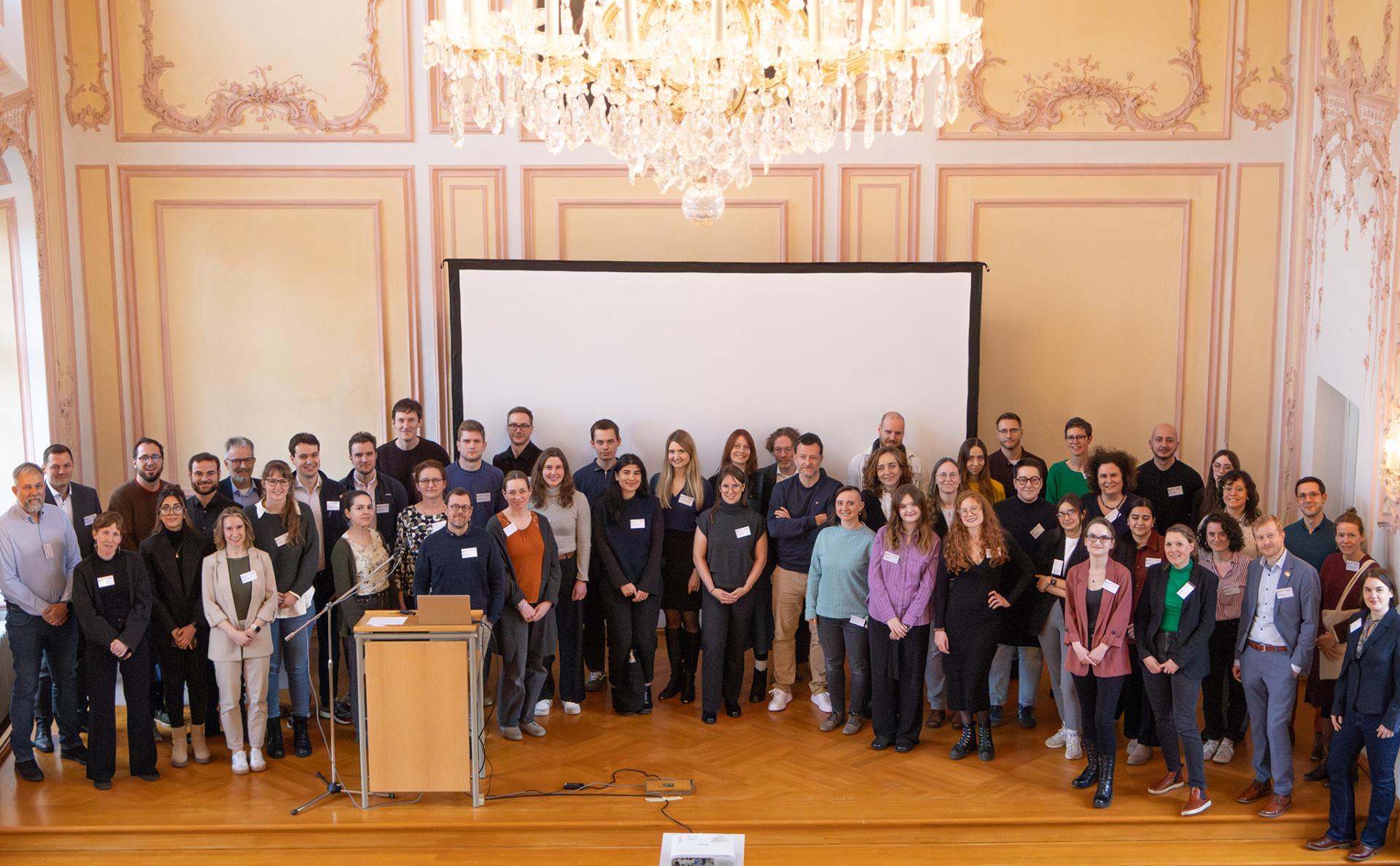
From March 12 to 13, 2026, the “Jugend- und Gästehaus Trier” became a vibrant forum for neuroscience research. Under the umbrella of the UniGR event series "ECHO", representatives from the cognitive neuroscience community at the seven UniGR partner universities gathered to discuss the latest scientific developments, meet new colleagues, and spark cross-border collaborations.
The event was organized by the Institute for Cognitive and Affective Neuroscience (ICAN) at Trier University. True to the ECHO motto: ‘Connecting minds for a resonating future‘, the meeting offered numerous opportunities for interaction and exchange in a unique setting, blending Trier’s historic charm with contemporary frames.
Opening and Keynote
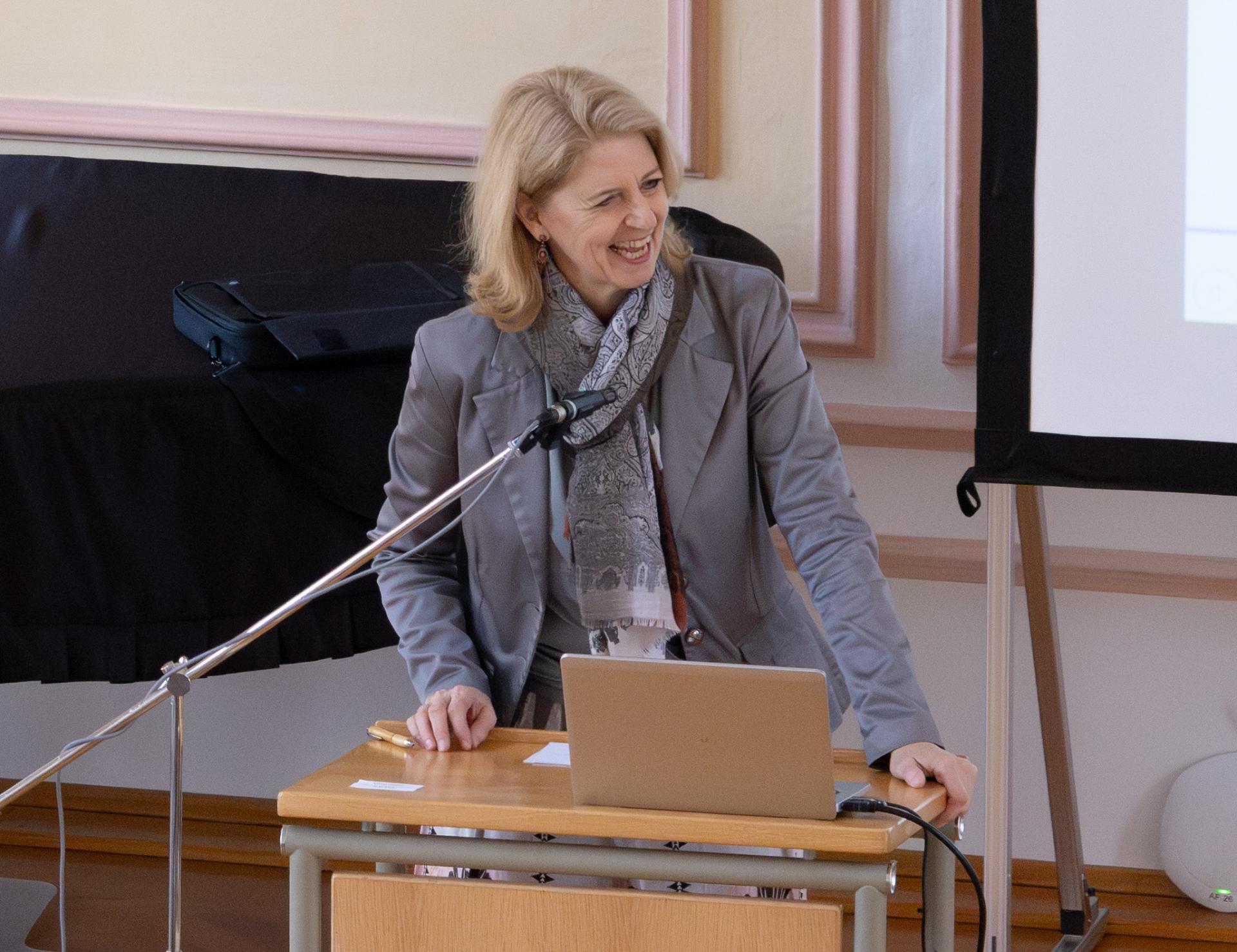
In her opening address, Prof. Dr. Eva Martha Eckkrammer, President of Trier University, highlighted ECHO’s role as a platform for scientific exchange and long-term networking across different career stages:
“The format of the ECHO series is certainly forward-looking: not only as an event for networking among established researchers in the Greater Region, but also and especially for networking among doctoral students and postdocs.”
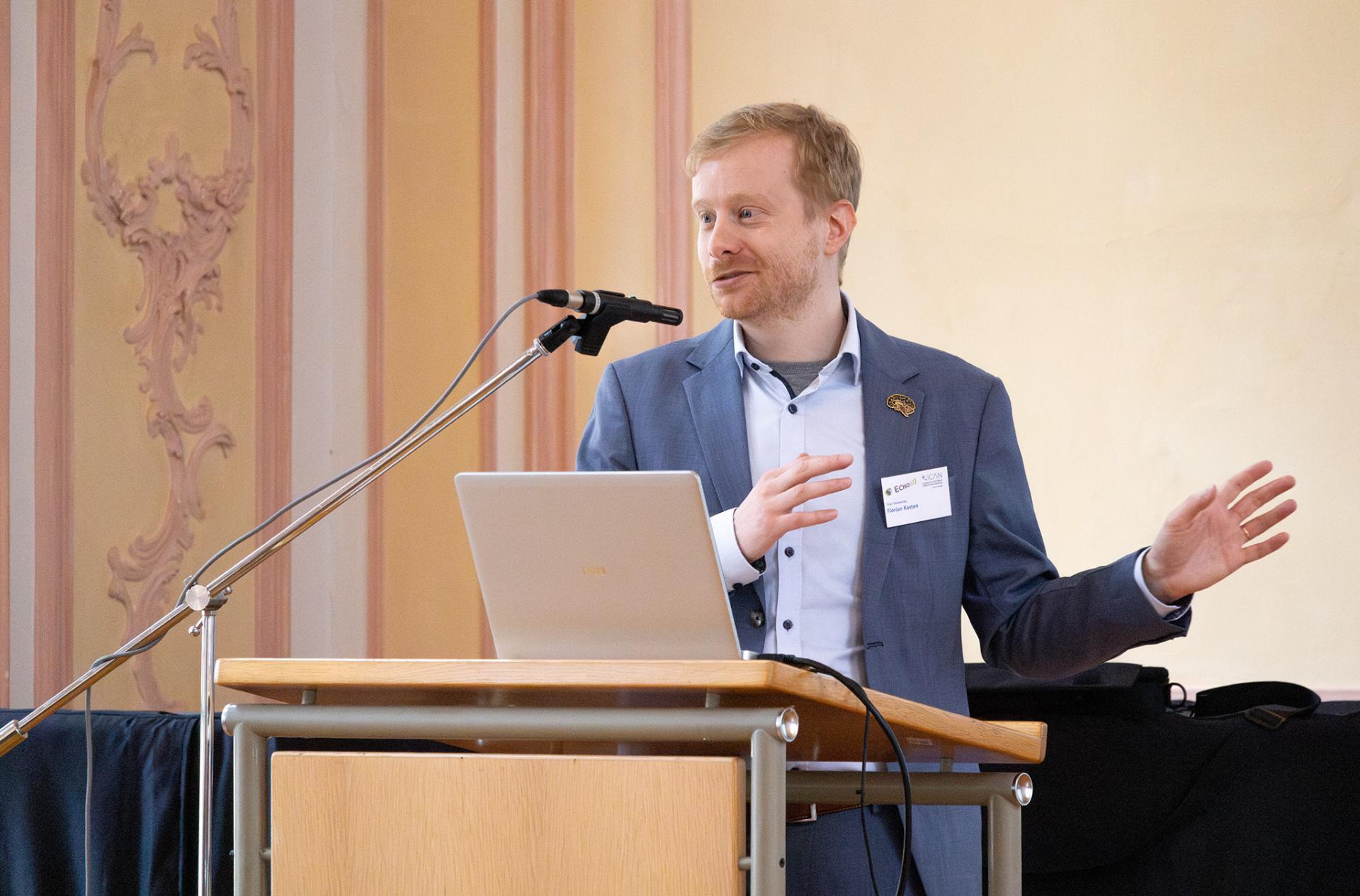
Jun.-Prof. Dr. Florian Kasten welcomed the participants on behalf of the Institute for Cognitive and Affective Neuroscience (ICAN) at Trier University and presented the institute’s research focus and organizational structure.
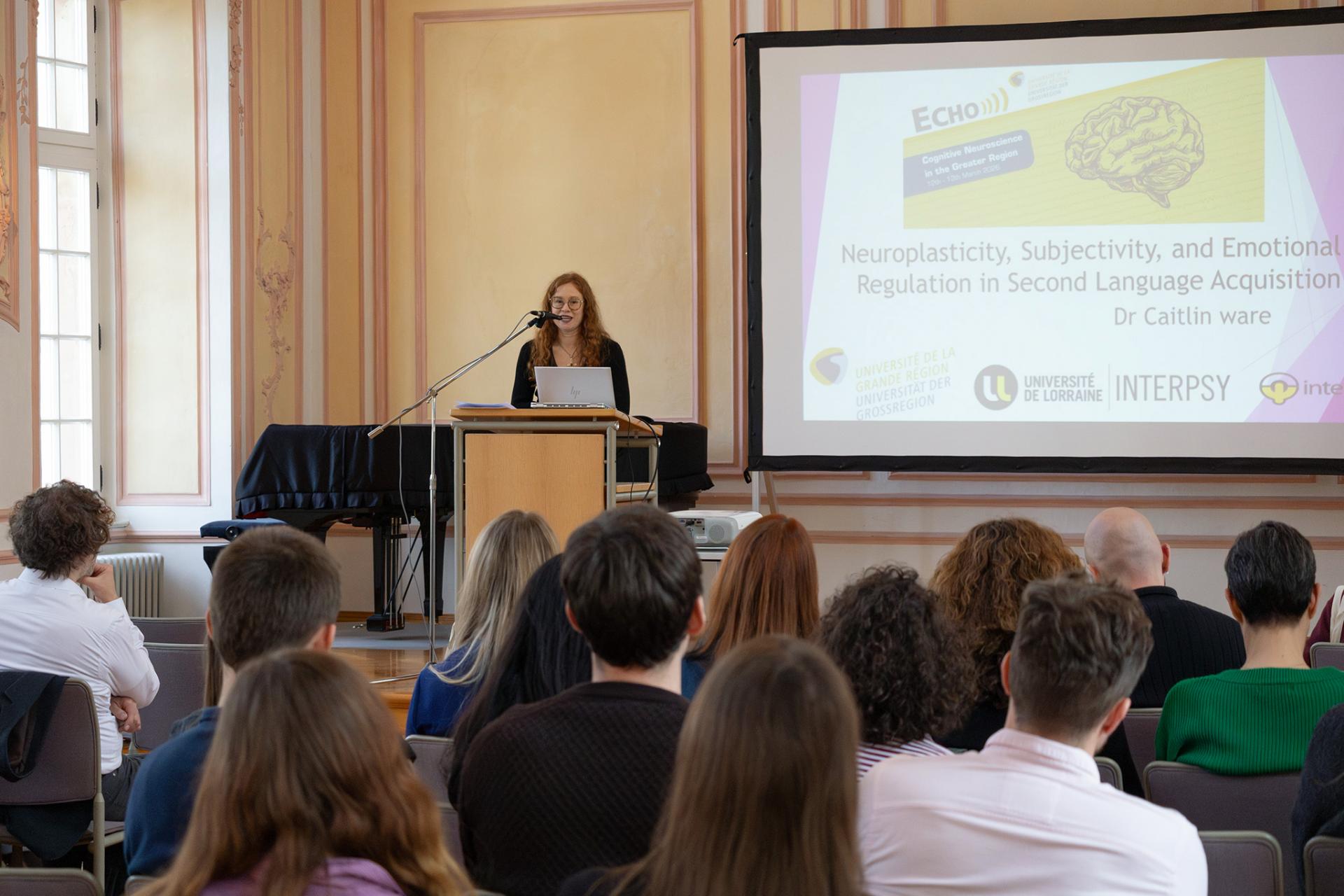
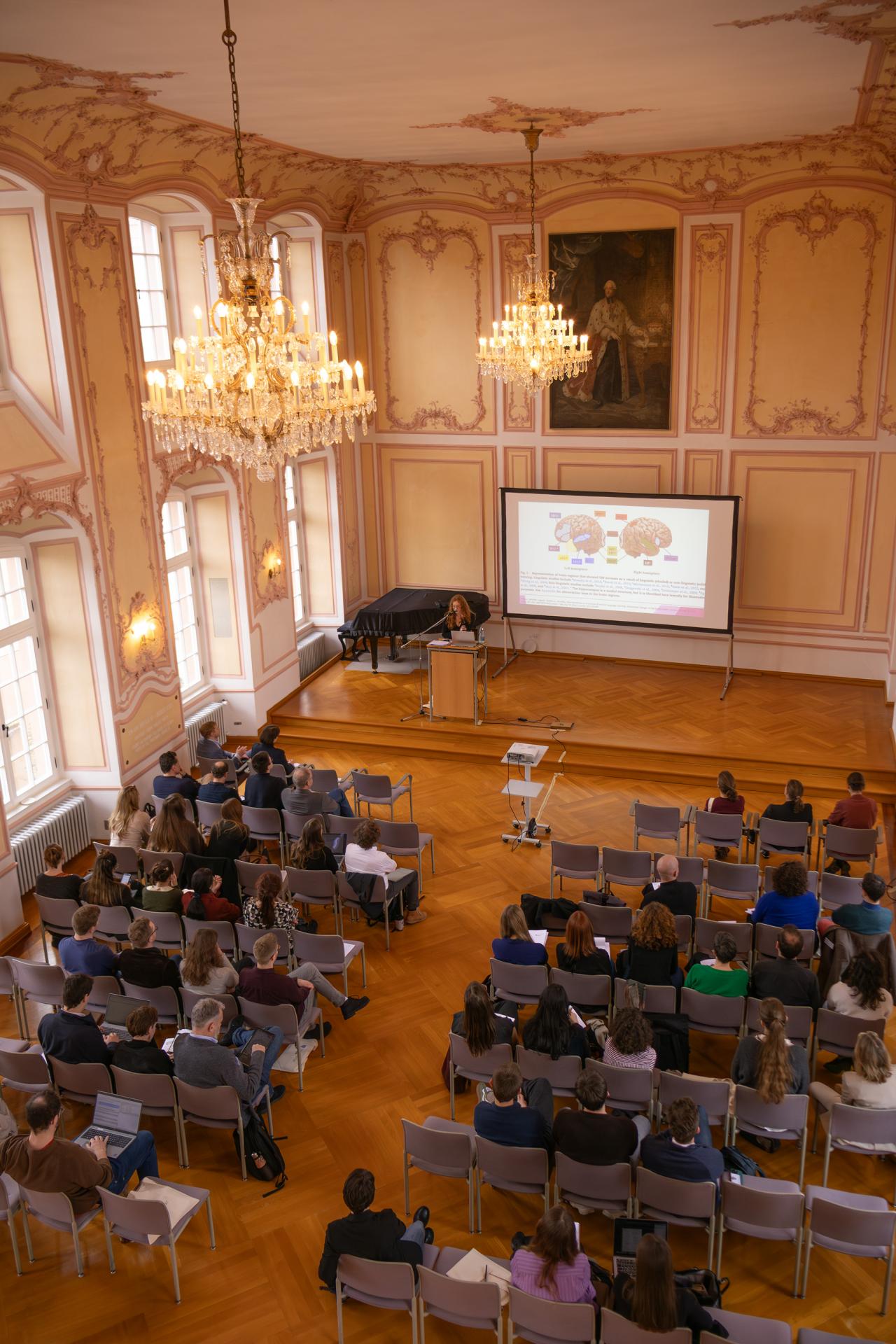
The conference session kicked-off with a compelling keynote by Caitlin Ware, Assistant Professor at the Université de Lorraine. She illustrated how learning a second language can enhance cognitive functions while also influencing emotions, judgment, and subjective perception—a topic of particular relevance in the multilingual, cross-border context of the Greater Region.
A Panorama of Neuroscience Research in the Greater Region
Following the keynote, research teams from the partner universities showcased their work—from in vivo imaging and protein analysis to psychoanalytic approaches—highlighting both the scientific and societal impact of the field. The presentations laid the ground for building connections and pinpointing common research interests.
Poster Session: Spotlight on Early Career Researchers
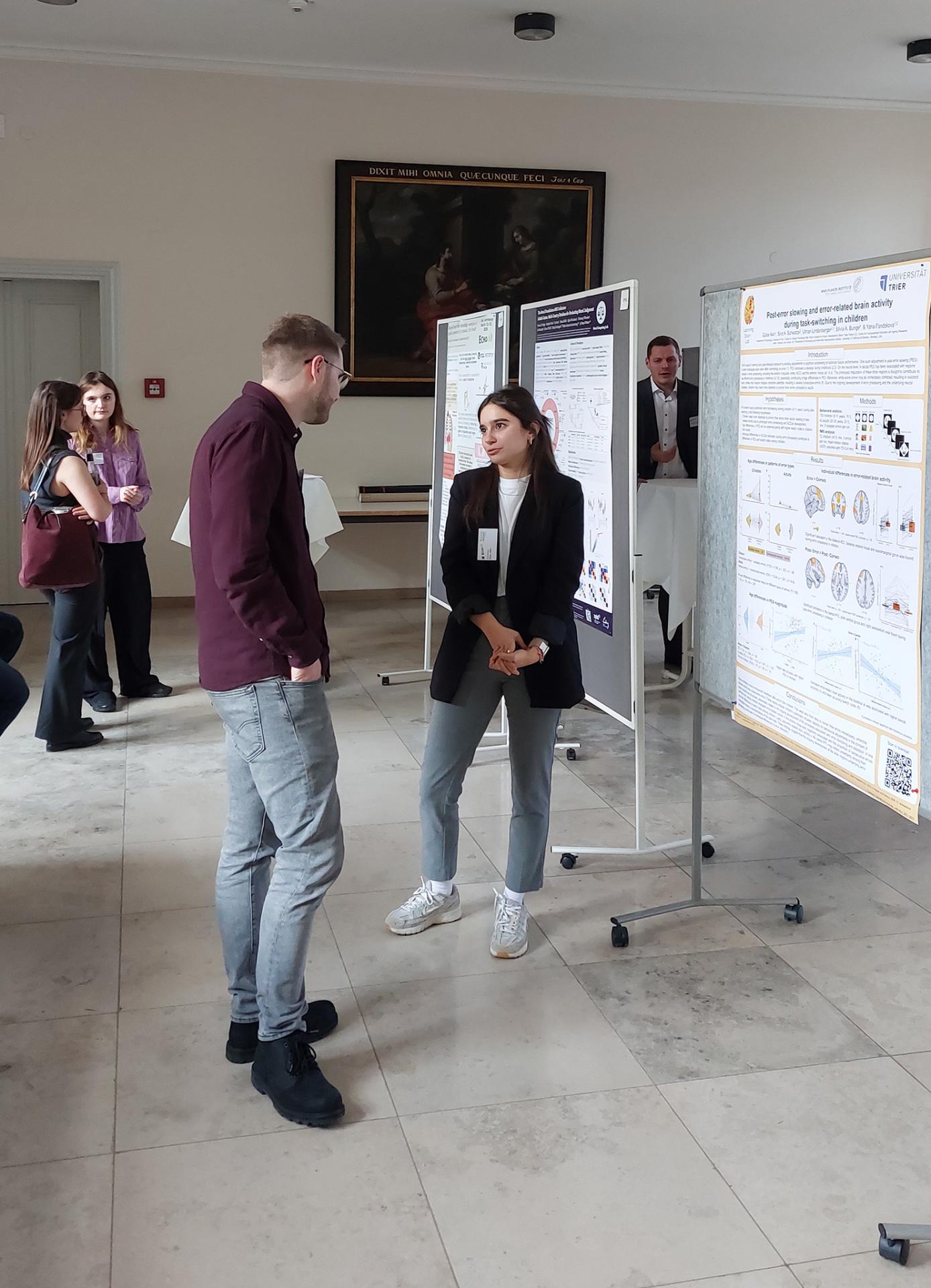
The afternoon poster session featured 33 contributions from early career researchers across the seven partner universities. The session emphasized the diversity of research topics and methods in cognitive neuroscience and gave a glimpse of the potential for collaboration between the institutes. Participants provided intriguing insights into their research questions, including:
- How bilinguals recognize words in two languages, and the role of word length and the word superiority effect
- How age and stress levels influence cognitive distraction from pain
- Which brain regions and neural signals are involved in recognizing familiar versus unfamiliar faces
The chance is yours: Funding and Collaboration Opportunities
The second day offered a comprehensive overview of funding and collaboration opportunities in the Greater Region. Cornelia Schmidt, Secretary General of UniGR, highlighted key offers of the alliance/university network available to researchers at the seven partner universities, as well as major European funding schemes supporting cross-border cooperation. Lorraine Brindel-Schild from Germany’s Interreg B Contact Point introduced the EU’s Interreg “North-West Europe” program, while Dr. Daria Sambuk from Trier University’s Research Support Office presented national funding opportunities, including DFG programs.
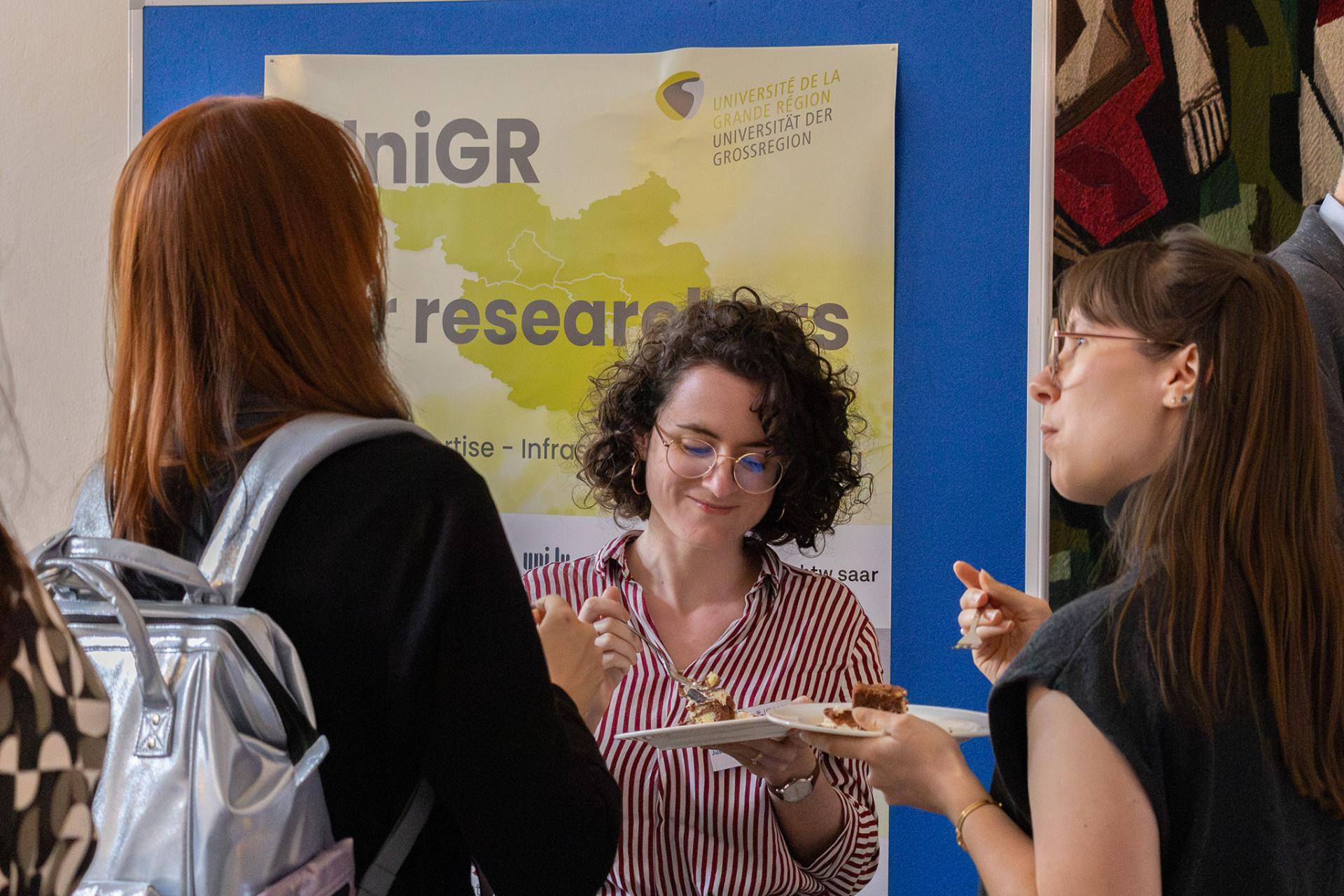
Beyond scientific presentations, the two conference days were marked by dynamic exchange. A 'speed dating' session and roundtables set the stage for participants to share their ongoing work and identify future paths for collaboration.
Overall, the event successfully brought researchers together on both a professional and personal level, paving the way for new teams and research partnerships to take shape across borders.