

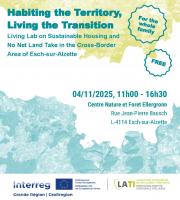
Living Lab on Sustainable Housing and Net Zero Land Take in the Cross-Border Area of Esch-sur-Alzette on Novembre 4th 2025
Rethinking Housing
The Living Lab “Habiting the Territory, Living the Transition” was conducted as part of the Interreg A IV LATI project and focused on one of the central themes for the future of the Greater Region: the compatibility between affordable housing and the goal of No Net Land Take (NNLT).
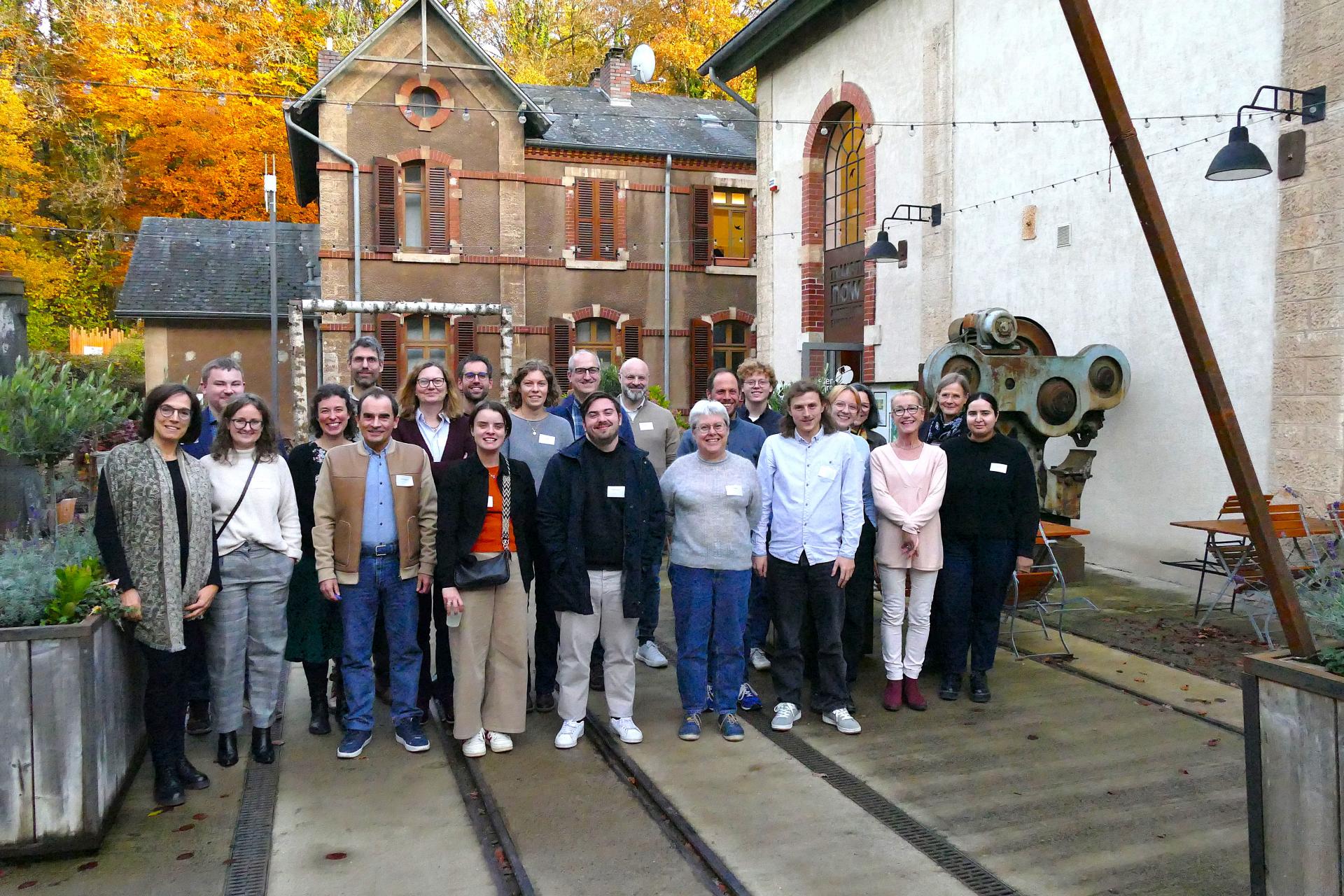 The cross-border area, particularly the Luxembourg border region, faces dual pressures: on the one hand, the population is growing rapidly, further increasing the demand for housing. On the other hand, European and national strategies are committed to significantly reducing the land take of new areas and bringing it down to zero by 2050. Land is considered a limited resource, and its sealing has significant ecological, climatic, and social consequences.
The goal of the Living Lab was to make these abstract conflicting objectives tangible for a non-specialist audience. Instead of theoretical discussions, the focus was on personal experiences, collective reflection, and playful planning scenarios.
Activity 1: Housing Trajectories – Housing as a Personal Experience
The event opened with the “housing careers” activity, which was deliberately inspired by the participants’ personal experiences. Each person mapped out their residential journey on a timeline: from childhood to the present, with a look toward the future.
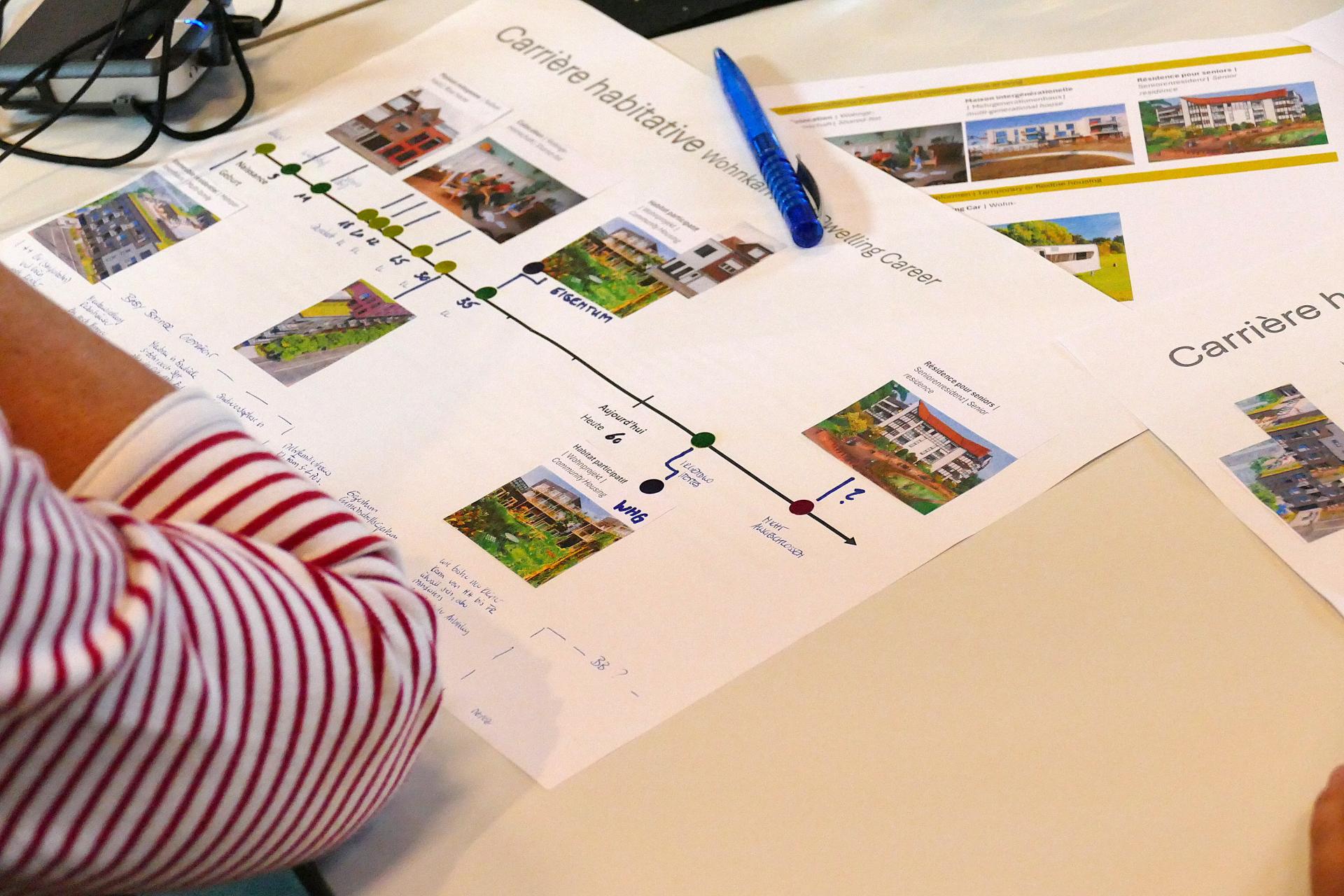
Despite very different backgrounds, recurring patterns emerged:
- many participants grew up in single-family homes or spacious apartments;
- during their studies and early careers, they mainly lived in smaller apartments, often located in cities well-served by public transportation (note that nearly all participants had a college education);
- as their professional situation stabilized and they started families, many sought more spacious housing, which often resulted in moving to the suburbs and longer commutes;
- changes in residence were most often driven by an increase or decrease in family size, a first job, and, in some cases, external factors such as the geopolitical situation of the place of residence.
Presentation: “No Net Land Take”
Following the first activity and a convivial meal, participants received a concise technical overview on the topic “No Net Land Take by 2050”. The goal was to establish a common understanding of the terms used.
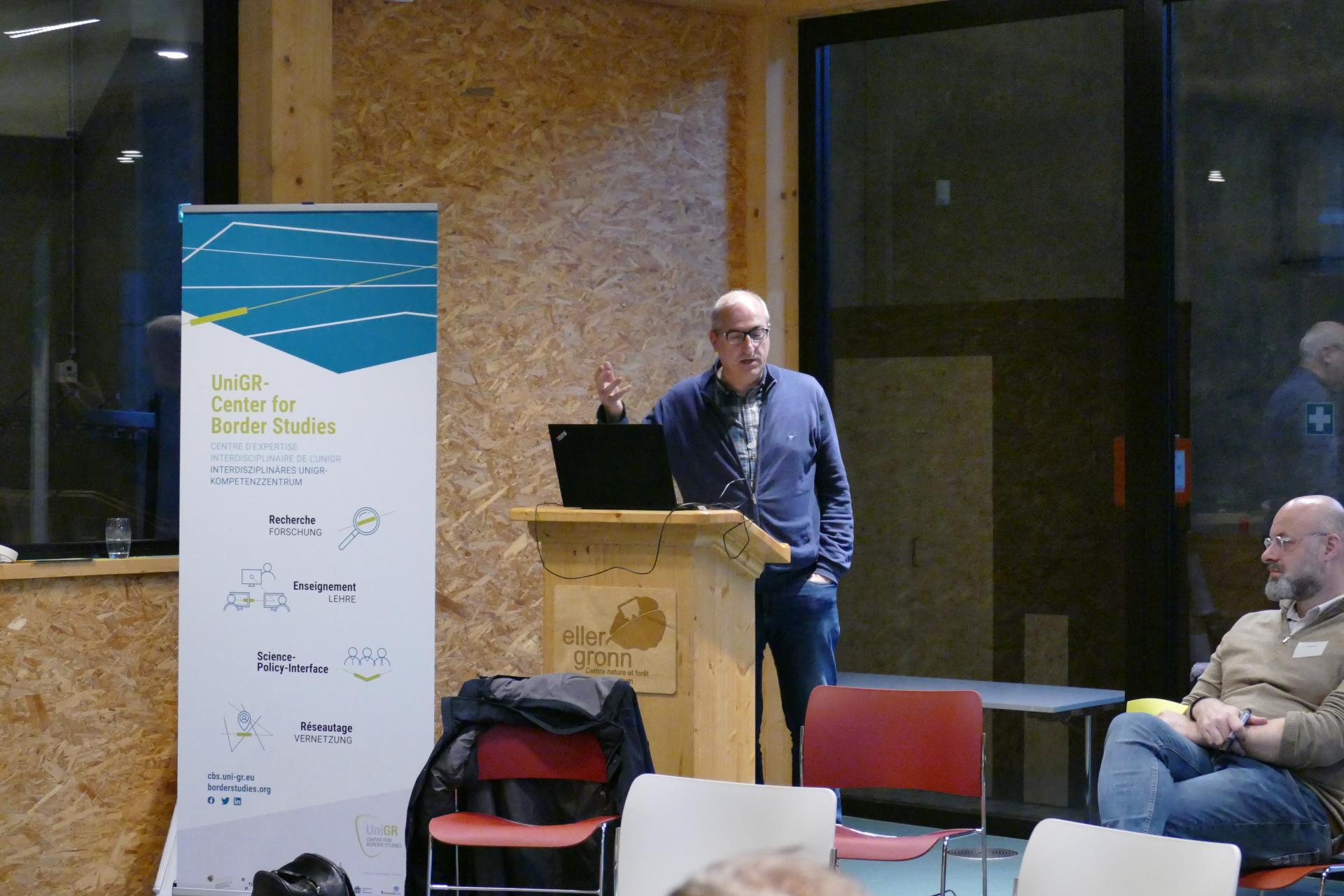 In particular, it was explained what is meant by “Land Take” (land consumption and soil sealing), why soil is considered a non-renewable resource, and what the ecological consequences of soil sealing are, particularly for biodiversity, the hydrological cycle, and the climate. It was also explained why the European Union is pursuing the goal of reducing net land take to zero by 2050, not by completely banning construction, but by taking measures such as compensation, densification, and the conversion of existing land.
The example of Luxembourg has shown just how difficult implementation can be. Despite ambitious goals, land consumption remains high, while the housing shortage and rising prices are exacerbating the pressure. The NNLT therefore requires integrated strategies, cooperation across different levels of government, and broad public acceptance.
Activity 2: Simulation Game – Land Use Planning Under Pressure
The simulation game, in which participants took on the role of planners themselves, formed the core of the living lab. The basis of the game was a 1:10,000 scale map of a cross-border area between Luxembourg City and the Lorraine municipalities beyond Esch-sur-Alzette (the Transect). The team had calculated a population of 277,000 for this area. Based on realistic demographic projections, the groups had to decide where and how to create additional housing for tens of thousands of people by 2030 (+27,000 residents), 2040 (+30,000 residents), and 2050 (+33,000 residents), with the goal of achieving net zero land take by 2050.
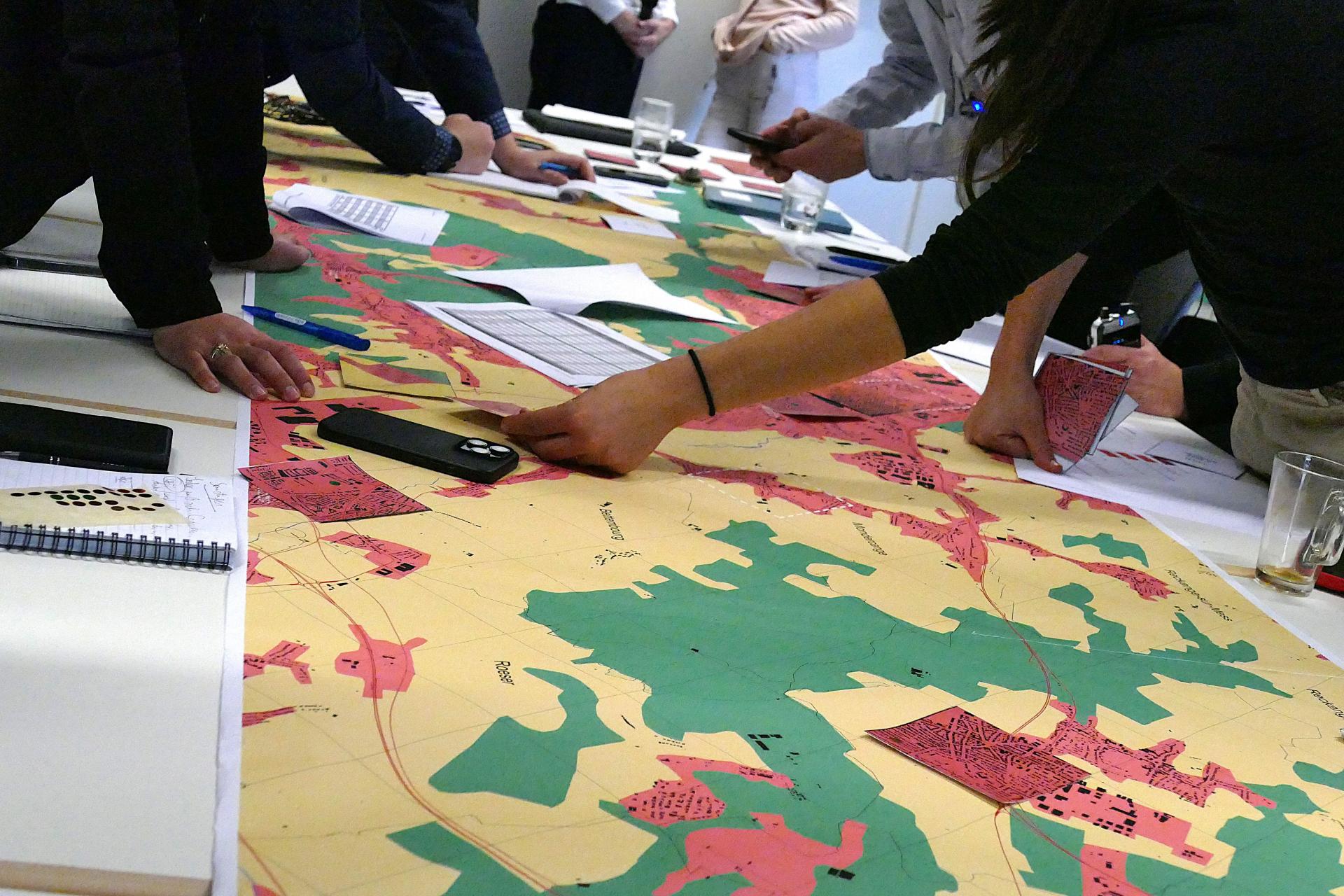
Despite differing approaches, several common trends emerged:
- low densities (typical areas of single-family homes) were deliberately avoided and considered outdated;
- there was a clear emphasis on densifying existing residential areas, particularly in Esch-sur-Alzette and Luxembourg City;
- brownfield sites were identified as having significant potential for housing development;
- new, high-density neighborhoods were created only in a targeted manner, generally in locations well-served by transportation routes;
- proximity to rail lines and highways played a central role (public transit-oriented development).
Activity 3: Fishbowl Discussion
The third activity of the living lab aimed to collectively reflect on the conclusions of the previous agenda items and provide perspectives for discussion. Under the title “Visions for Future-Oriented Housing in Luxembourg and Its Surroundings in 2050”, a space was deliberately created for open-ended questions, personal assessments, and aspects that had not yet been addressed. The chosen method was a fishbowl-style discussion, with two concentric circles of chairs—the outer circle for members of the public, who could move into the inner circle to speak.
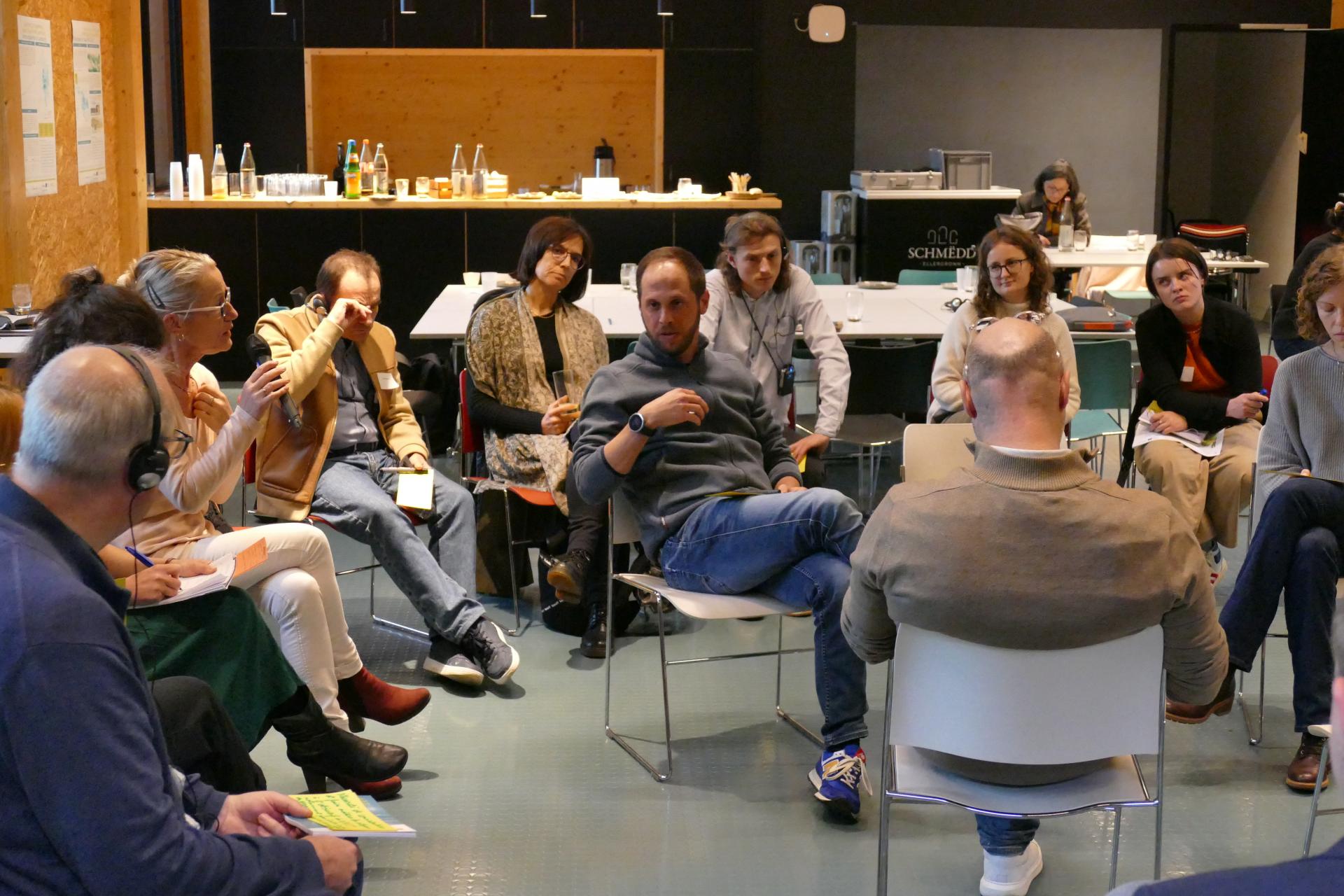
The discussion, which lasted approximately 45 minutes, was divided into three themes:
- Theme 1 – Needs for future-oriented housing
- Theme 2 – How and where to create housing
- Theme 3 – Feasibility of the NNLT goal by 2050
The exchange between experts and the living lab clearly demonstrated that the combination of strong population growth, limited land resources, and rising housing costs poses major challenges for the Luxembourg cross-border region. While the NNLT objective is recognized as an important guiding principle, there is still a lack of binding cross-border instruments, common monitoring systems, and sufficiently coordinated planning approaches. It was agreed that only enhanced cooperation among municipalities, early citizen participation, attractive pilot projects, and better coordination between planning, mobility, and resource management will enable the creation of affordable and compact housing in the future.
The Living Lab was aimed at both practitioners and civil society. The formats were chosen to familiarize a non-specialist audience with the topics of affordable housing, the NNLT, and, more generally, spatial planning. The participants were all already somewhat familiar with the subject, which enriched the discussions.
For more details, see the official report for Interreg in German and French